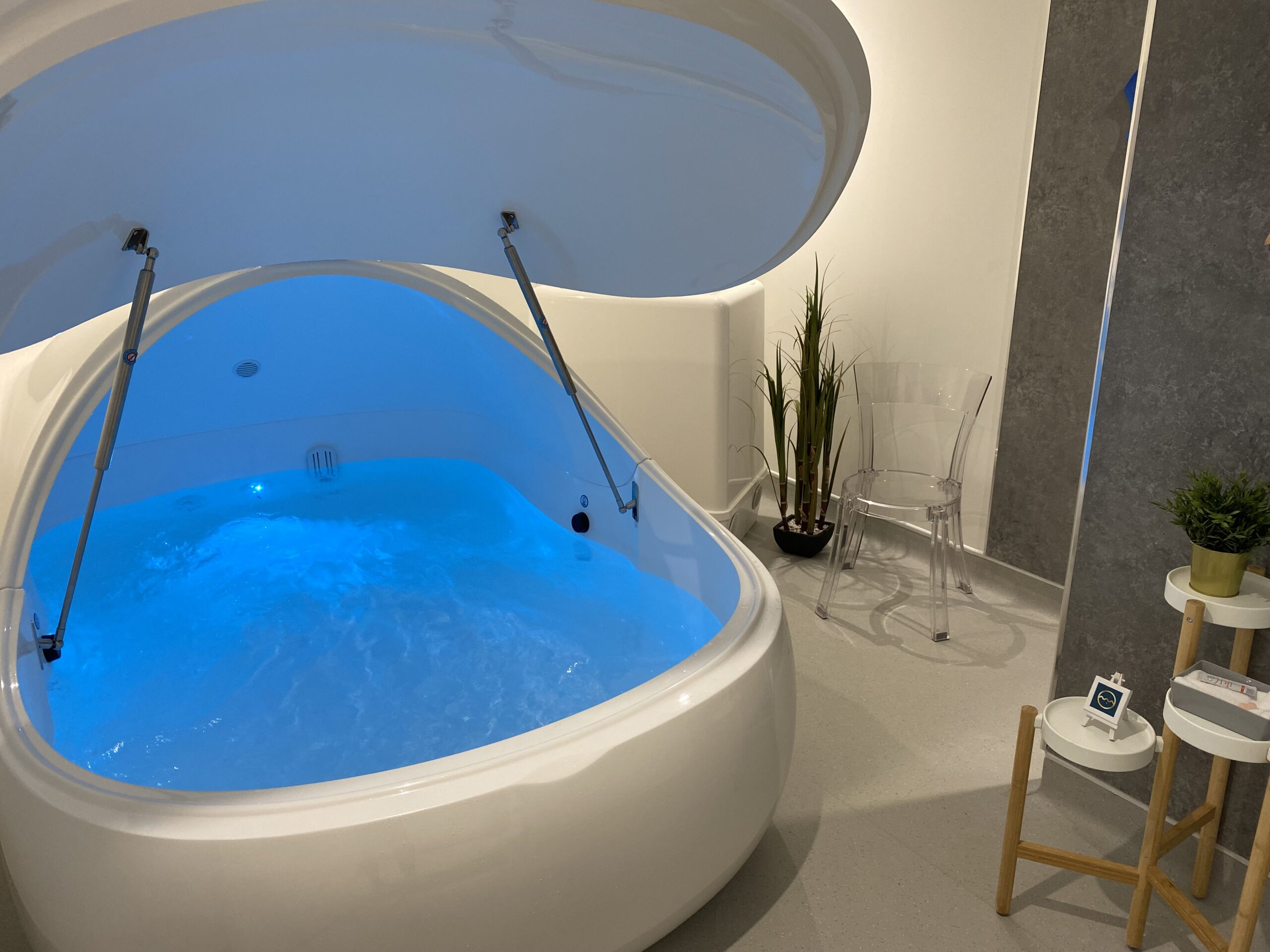
What Is Float Therapy?
The basic idea of floating is simple. First you minimise or completely remove the sensory input to your brain – you just shut everything off – every signal to your brain from the outside world! Float therapy is freeing yourself from all sensation of gravity, temperature, touch, sight and sound (which together accounts for 90% of normal neuromuscular activity), you then conserve and can redirect vast amounts of natural physical and mental energy.
Most people have five senses: touch, sight, sound, taste and smell. Taste and smell are easy to remove from everyday life (just go into a clean empty room and don’t eat anything!) Real distractions come from touch, sight and sound. These are the hardest to minimise or remove. Normal life means your body and mind is in a constant state of hearing, seeing and feeling. Its how life is and how we function. Even doing nothing and standing still in an empty room your body is having to process the environment, you are balancing your body and your brain is constantly scanning, computing, categorising to process your visual surroundings and your state of wellbeing.



History of Float Therapy
The begining of Sensory Deprivation was in the 1950’s from an American neuroscientist and psychoanalyst Dr John C Lilly. He was interested in studying the brains response when deprived of external sensory input. Dr Lilly worked at the National Institute of Mental Health (NIMH) in the U.S. His first tanks that he built were quite crude – Dark, filled with water and needed his subjects to wear a breathing mask – So very far away from the float tanks of today! His study was exploring whether the brain would “shut down” without stimulation. Instead, he found people entered deep states of relaxation and altered states of awareness – a discovery that later inspired interest in meditiation, stress reduction and self- exploration.
Float therapy has made a major comeback with better understanding of self care, mindfulness and mental health awareness. Modern float tanks/pods are large, spacious and beautifully designed to enhance relaxation and provide an all-encompassing world of absolute calm and tranquility. Its like a silent sanctuary where anxieties and stresses are able to simply float away.
How Does It Work?
Float therapy consists of floating on a bed of body temperature water saturated with 500kg of pharmaceutical grade Epsom Salts in a light proof and soundproof pod to which you just lie back, relax, and let yourself float effortlessly on the surface of the water and enjoy a feeling of complete weightlessness.
Our pods are 8ft in length and 5ft wide and have only 12 inches of water in them! More than enough space for the tallest of people to stretch out and move around. Floating takes the pressure of gravity off joints and muscles and your body is put into a high state of physical relaxation. Blood pressure and oxygen intake reduce but at the same time blood flow and the distribution of red blood cells increases. Float therapy has been shown to loosen the muscles and give more control over your nervous system. Floating stimulates the brain to secrete endorphins; pain killing, euphoria-creating substances know as the body’s own opiates.